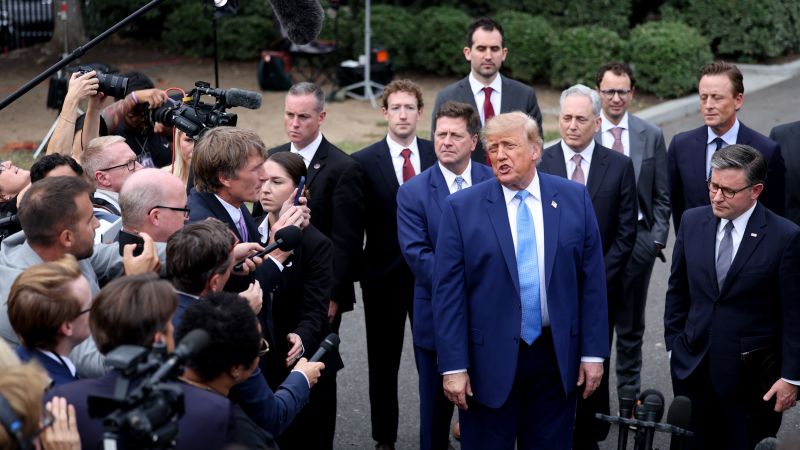
President Donald Trump recently gathered a circle of tech moguls on the White House drive, but rather than addressing the growing alarm surrounding artificial intelligence, he opted for a rebranding effort. While companies like Anthropic have warned that their models could pose catastrophic or even existential risks to humanity, Trump brushed aside these anxieties by announcing that AI should henceforth be called SI, standing for Super Intelligence. To the president, this shift in terminology accompanies a firm commitment to avoid slowing down research, relying instead on a morally binding pledge from tech leaders to self-police their own inventions.
This casual approach creates a stark contrast with the prevailing mood of the American public. Recent polling suggests that roughly three quarters of the population view the rise of AI with fear and concern, with a vast majority wanting more federal regulation. Beyond the abstract fear of an algorithmic takeover, voters are already feeling the tangible effects of AI expansion through rising electricity bills driven by energy hungry data centers. By dismissing these worries as a Democratic hoax designed to hinder Republicans, Trump risks alienating a significant portion of his base who see their livelihoods and infrastructure under threat.
The gamble extends beyond short term politics into deeper questions of governance and safety. Critics argue that trusting billionaire tech oligarchs to regulate themselves is a dangerous leap of faith, noting that this same industry has often ignored societal impacts in favor of rapid growth. Unlike civil aviation or medicine, where strict government guardrails ensure public safety after failures occur, Trump’s vision involves almost total deregulation. His insistence that patriotic love for the country will suffice as a safety mechanism ignores decades of precedent showing that corporate interests rarely prioritize public welfare over profit without legal compulsion.
Ultimately, this blasé attitude echoes early patterns seen during the Covid 19 pandemic, where optimism was often used as a substitute for systemic preparation. If AI continues to trigger security breaches or causes widespread economic disruption, the responsibility for failing to implement safeguards will land squarely on the administration. While Trump believes he is winning a geopolitical race against China by unleashing American innovation, he may find himself extraordinarily exposed if the lack of oversight leads to a genuine national crisis.